Museums and Monuments
Clock Tower of Chalki
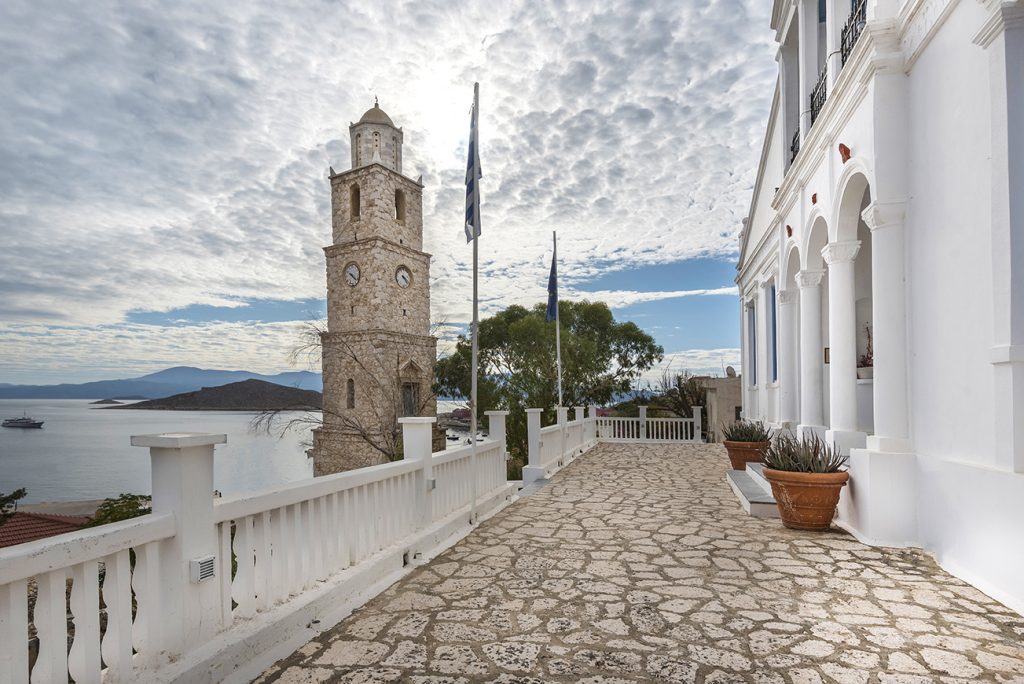
The Clock Tower of Chalki is located in the beautiful village of Nimborio. The clock tower is distinguished by its remarkable architecture. It was built with donations from the expatriate community of Chalki.
Traditional House of Chalki
The Traditional House of Chalki is located in the charming village of Nimborio. The exhibits include items from the local cultural heritage of the island, such as traditional embroideries and cooking utensils.
Windmills of Chalki
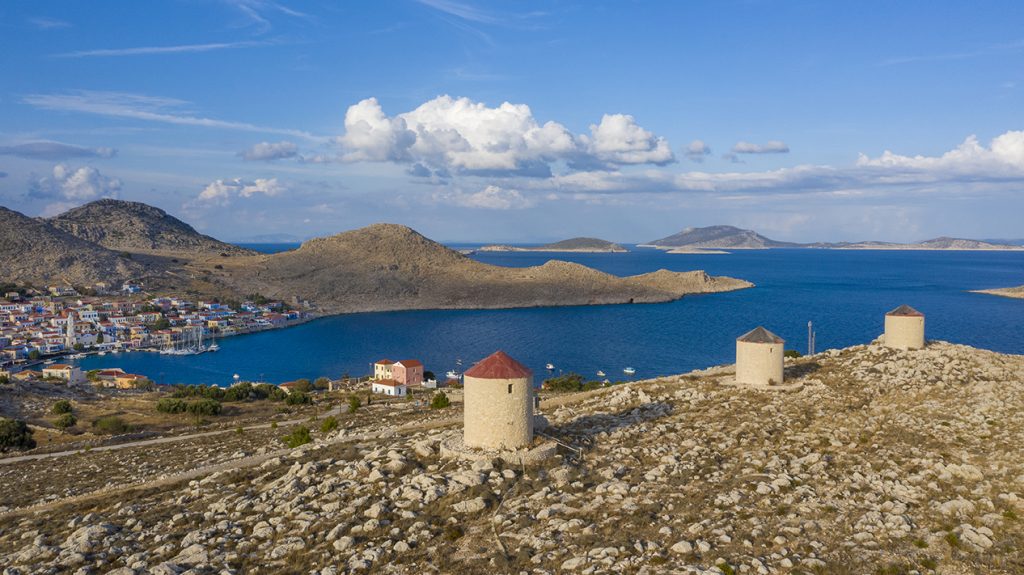
The Windmills of Chalki are the landmark of the island, standing at the top of the hill above Nimborio. In the past, the windmills were powered by the wind, as is the case with many other islands in Greece, known for their strong winds. Although the windmills no longer function, they still serve as a symbol of the island’s long history.
Castles and Fortresses
The Knights’ Castle
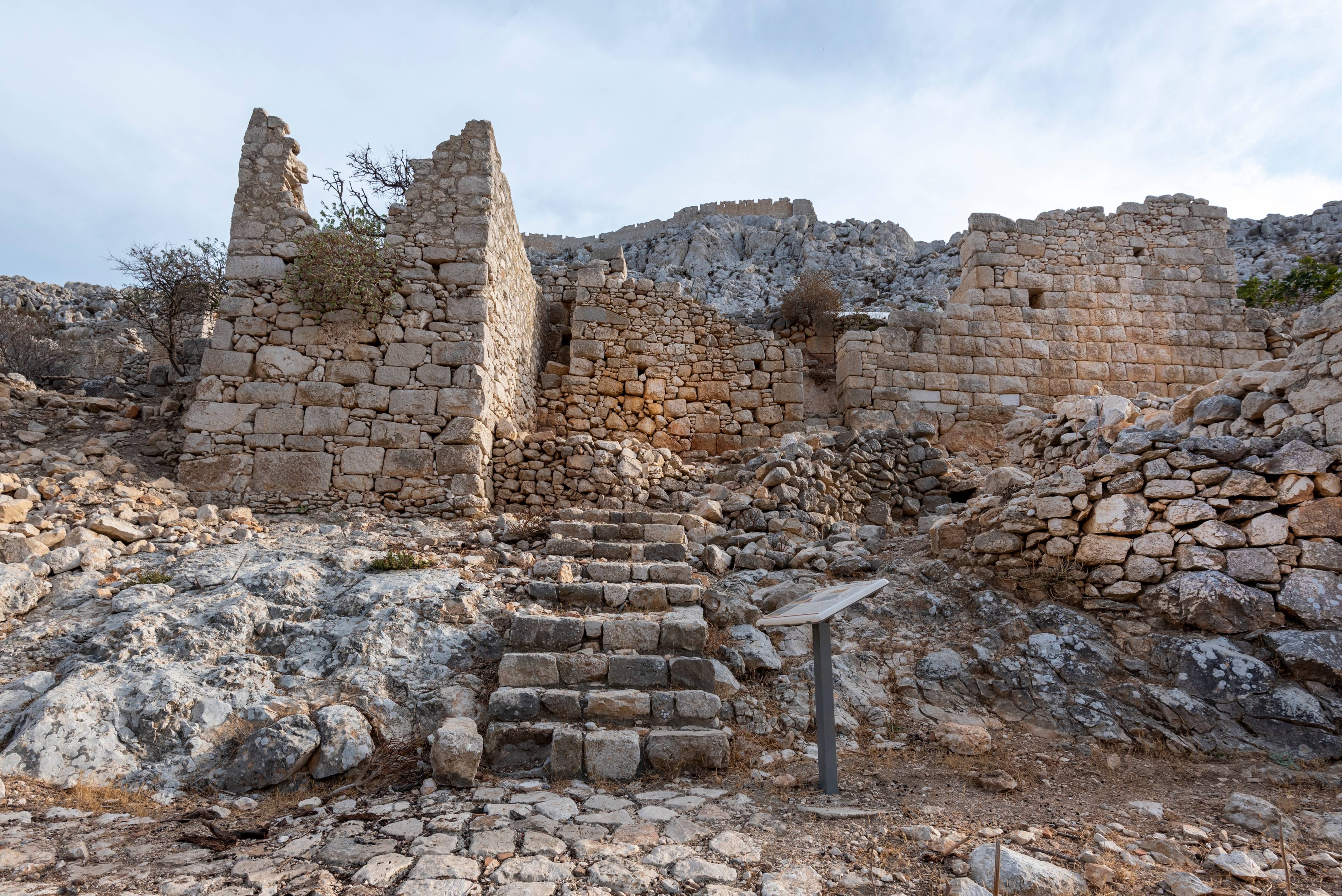
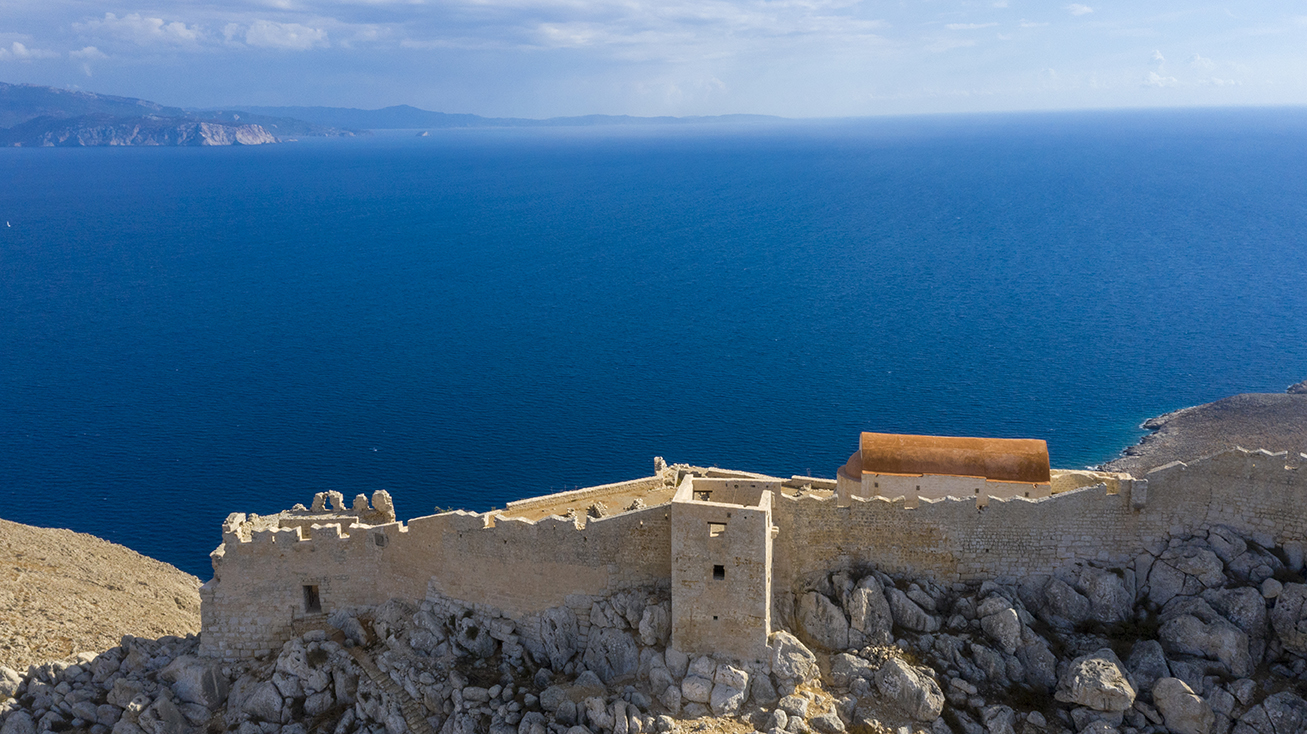
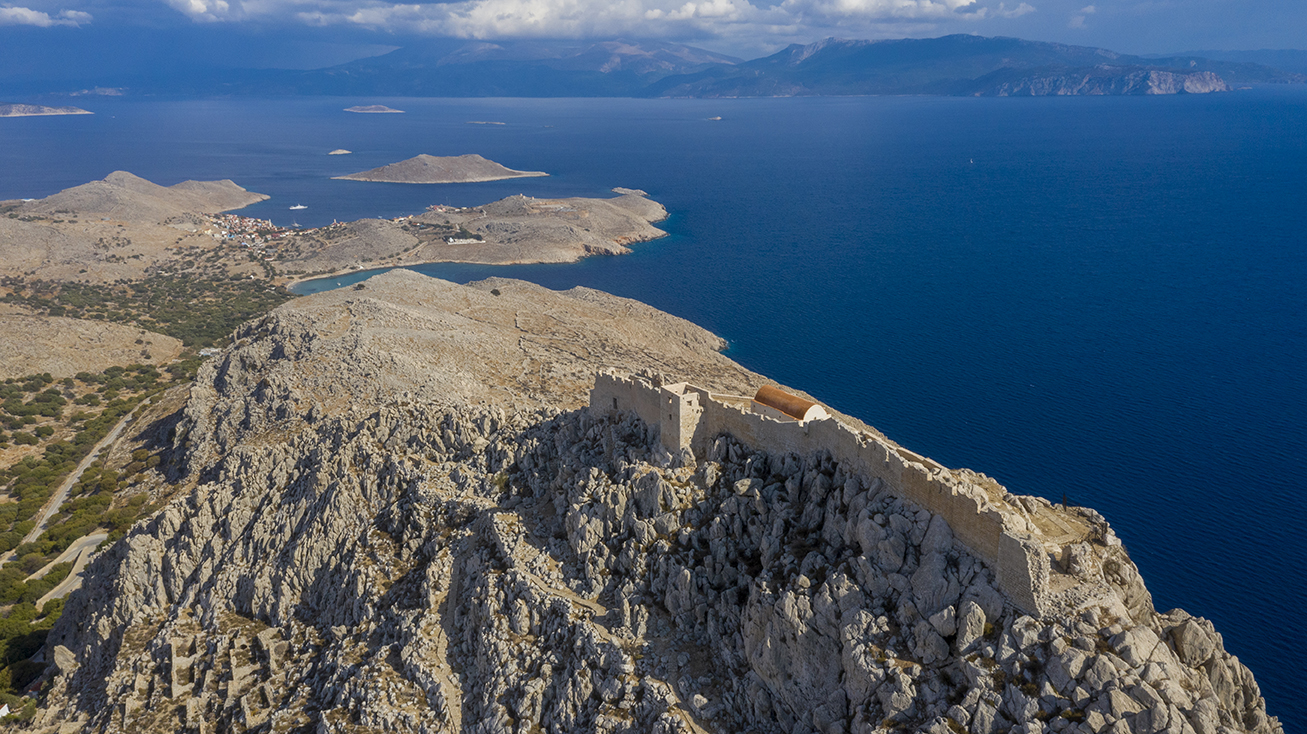
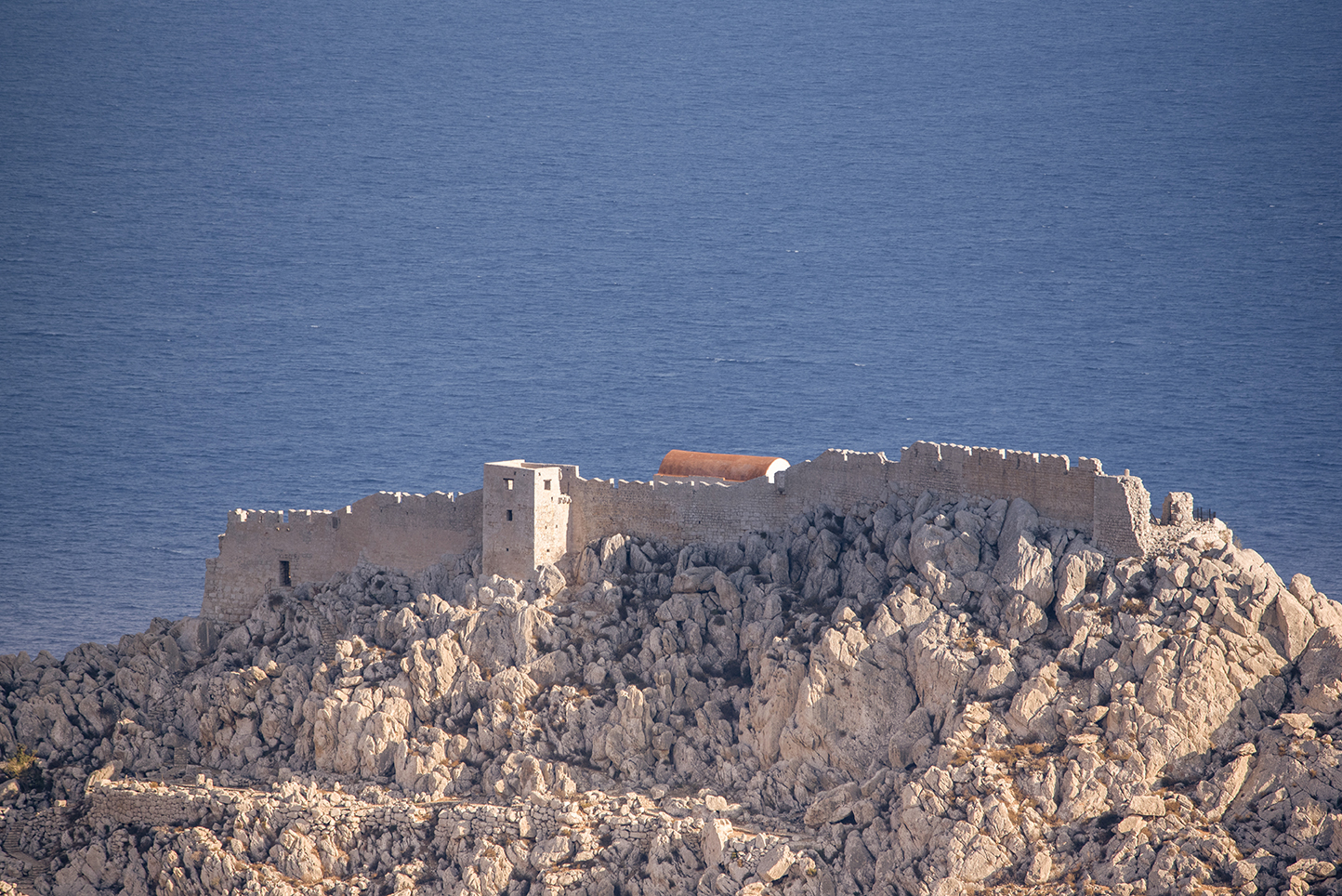
The Knights’ Castle is located at the northeastern part of the island, at the top of Agios Nikolaos Hill, built on the foundations of an older, possibly Hellenistic, wall. It was founded by the knights of the Order of Saint John in the mid-14th century and lasted until it surrendered to the Ottomans in 1522, after the fall of Rhodes. It is accessible via a path that ascends from the Church of Panagia in Chorio. The climb is slightly steep, but it takes no more than 20 minutes.
At the entrance of the castle, you can see the integrated coat of arms of the Grand Master of the Knights of St. John, Pierre d’Aubusson. The Church of Agios Nikolaos is still preserved within the walls, with frescoes from the 15th and 17th centuries. During the years it was used, the castle had visual contact with the “fryctoria” tower (a communication tower) at the westernmost tip of the island, at Cape Kefali. When necessary, it would send signals to the “viglatores” (watchmen) of Rhodes.
Churches and Monasteries
Church of Agios Nikolaos
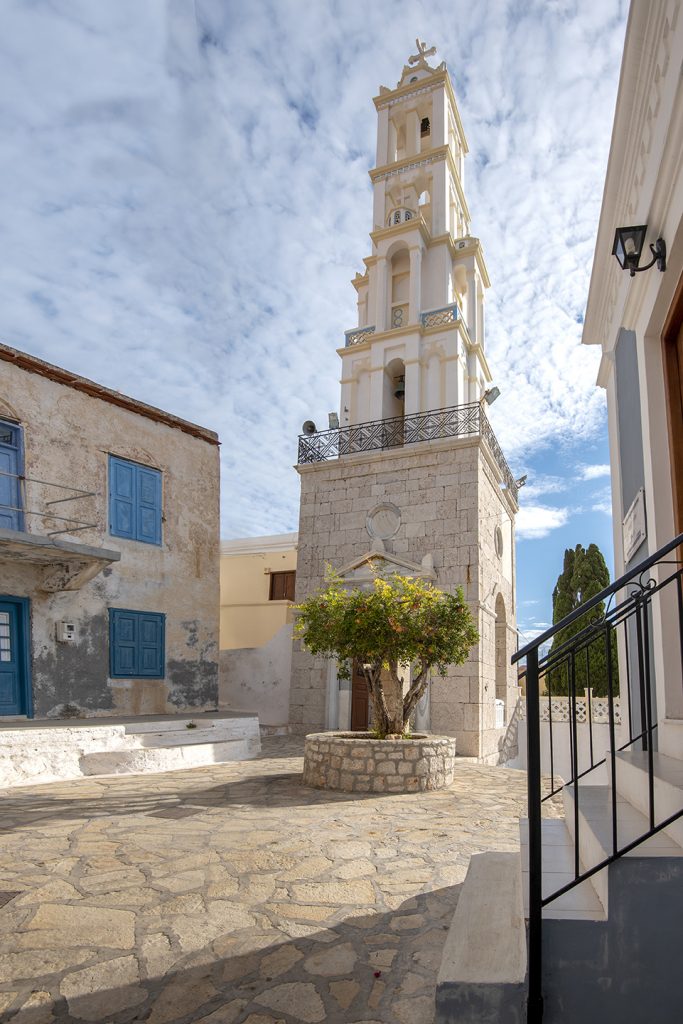
The Church of Agios Nikolaos is an imposing church located in Nimborio. The church stands out for its beautiful black-and-white mosaic courtyard and its magnificent bell tower. It is worth noting that the bell tower of Agios Nikolaos was constructed with the marbles from the ancient temple of Apollo and is the tallest bell tower in the Dodecanese. Inside the church, there is a small ecclesiastical museum. The church celebrates in honor of Agios Nikolaos on December 6th.
Church of Panagia Choriani
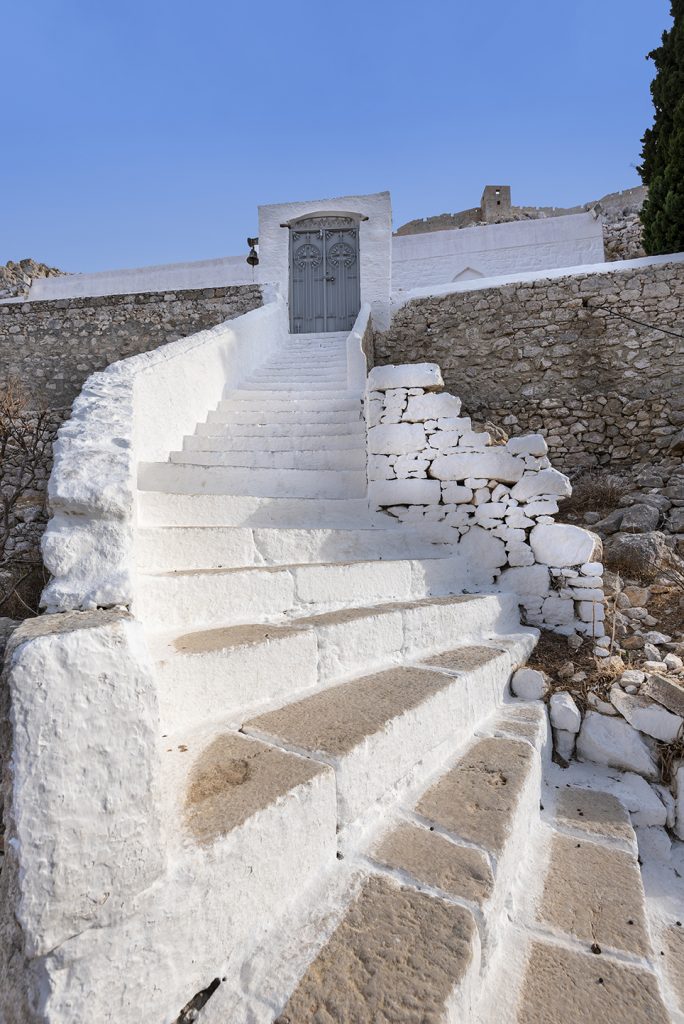
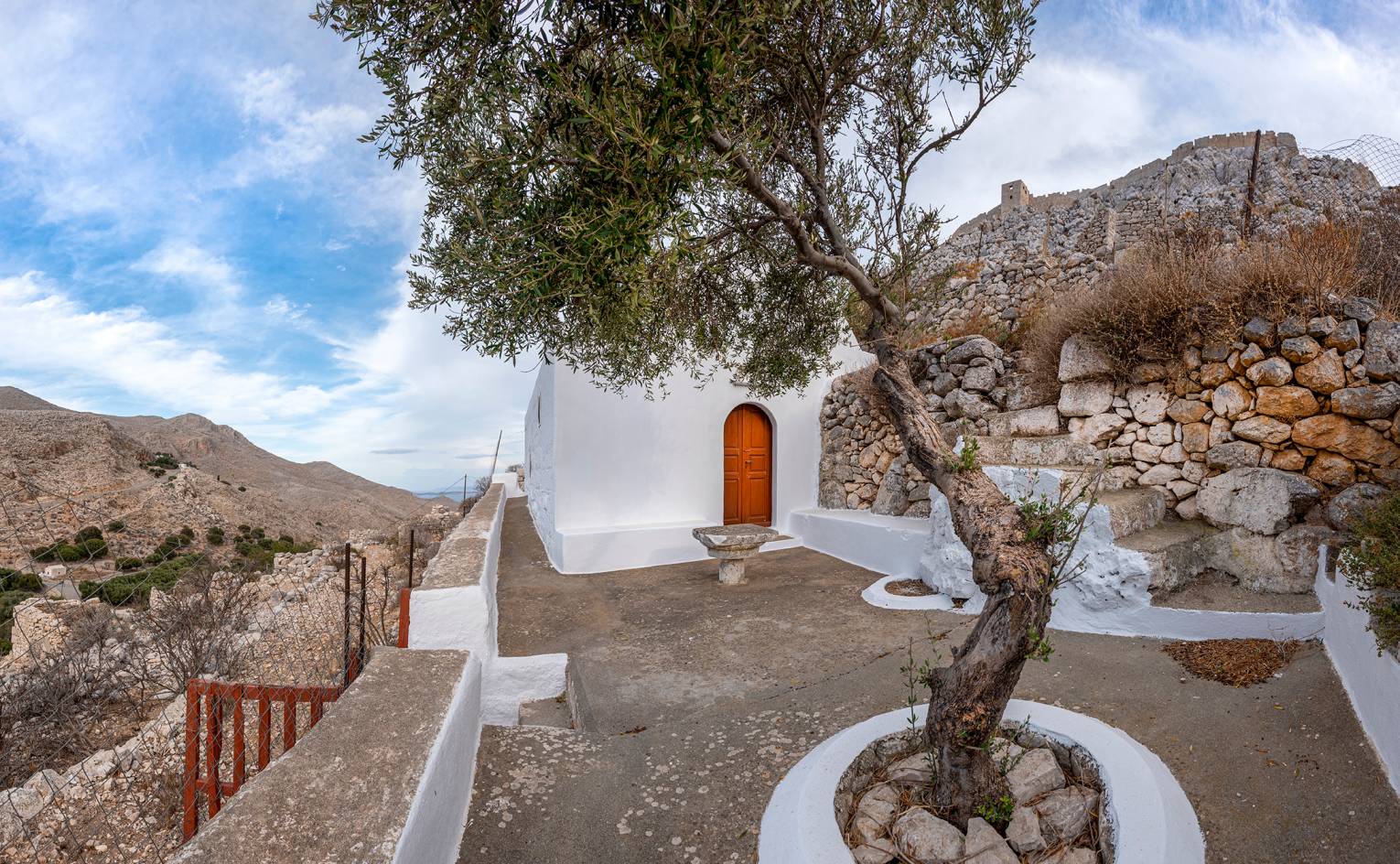
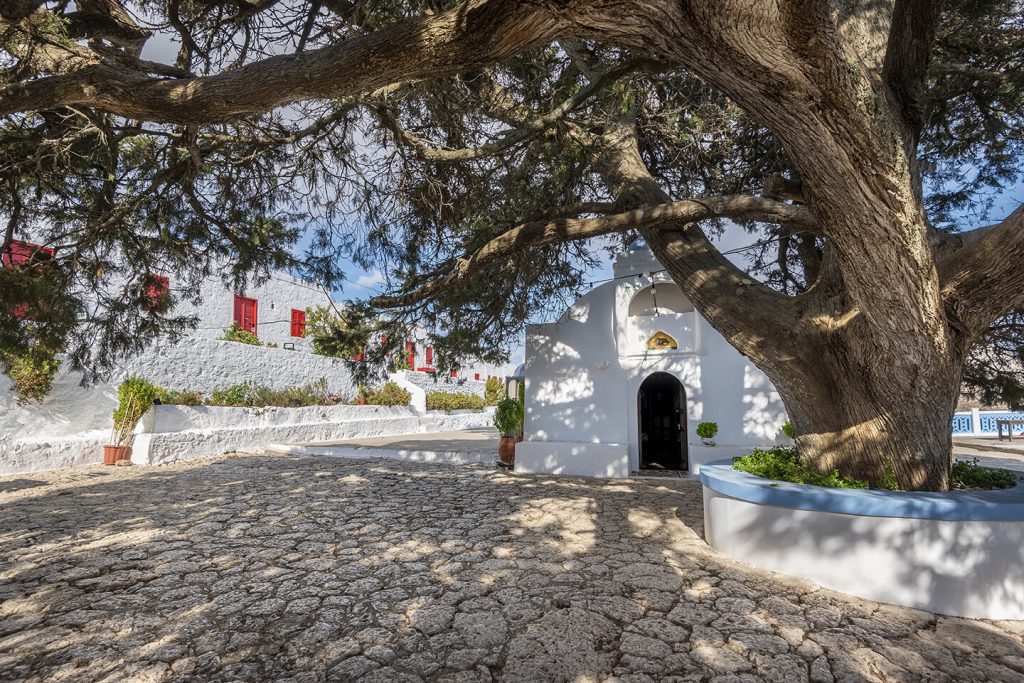
The Church of Panagia Choriani is a charming chapel located above Chorio. Inside the church, you will have the opportunity to admire the beautiful frescoes. The great feast of Panagia Choriani that takes place every August 15th “awakens” the soul of the abandoned 19th-century old capital of the island.
Monastery of Agios Ioannis (Alarga)
The Monastery of Agios Ioannis of Alarga is a beautiful monastery located in one of the most remote areas on the western side of Chalki. The monastery offers a panoramic view of the surrounding areas. It is possible to stay for a day in one of the monastery’s cells upon arrangement with the ecclesiastical committee. The island’s largest traditional feast is held at the monastery on August 28th.
Monastery of Archangel Michael Panormitis / Palarniotis
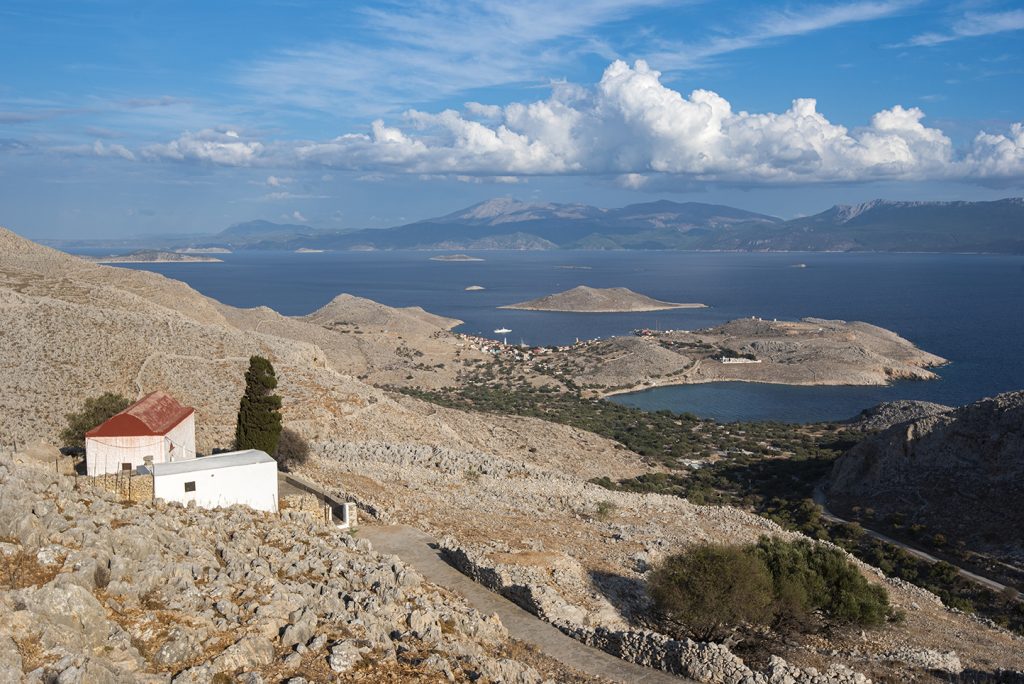
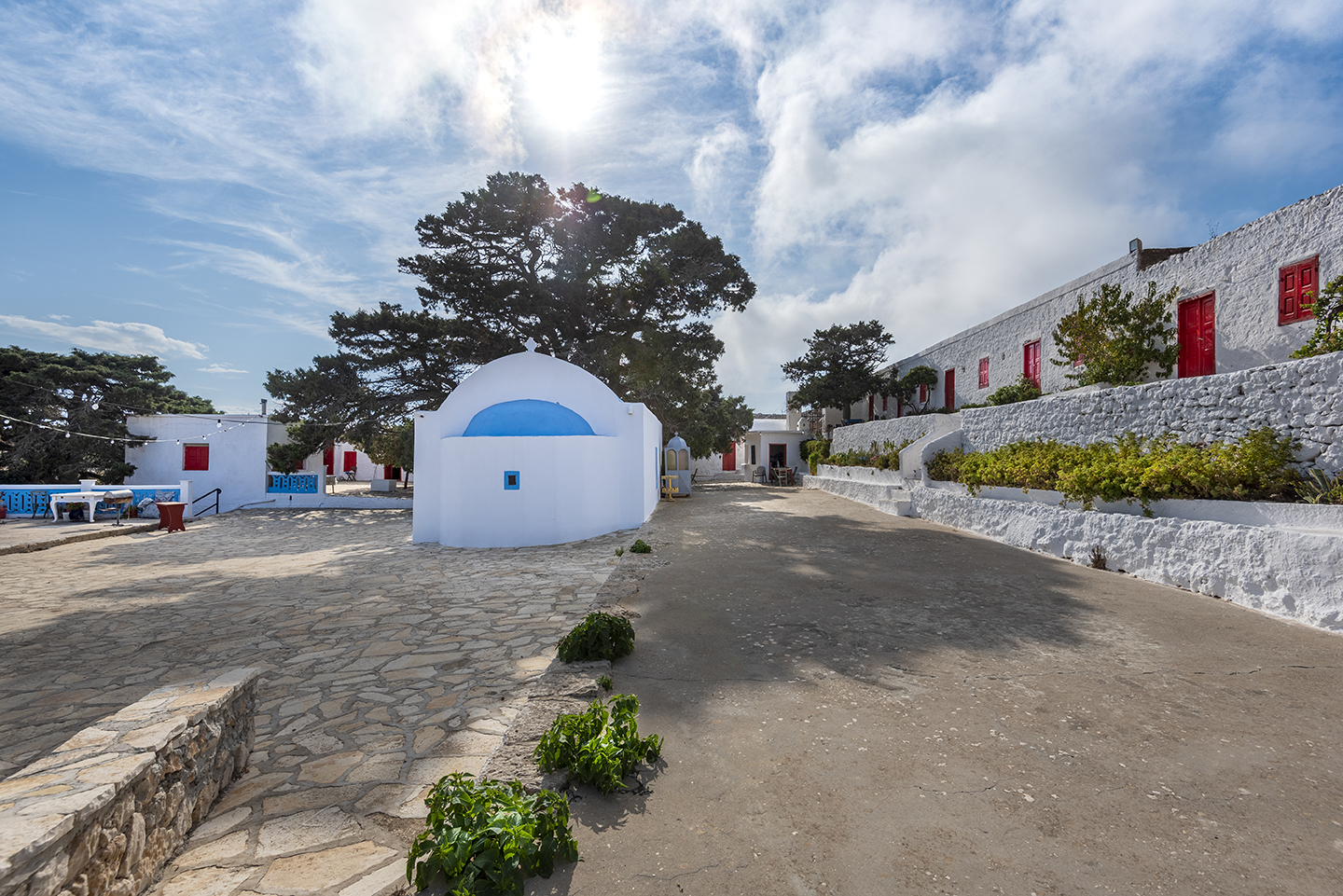
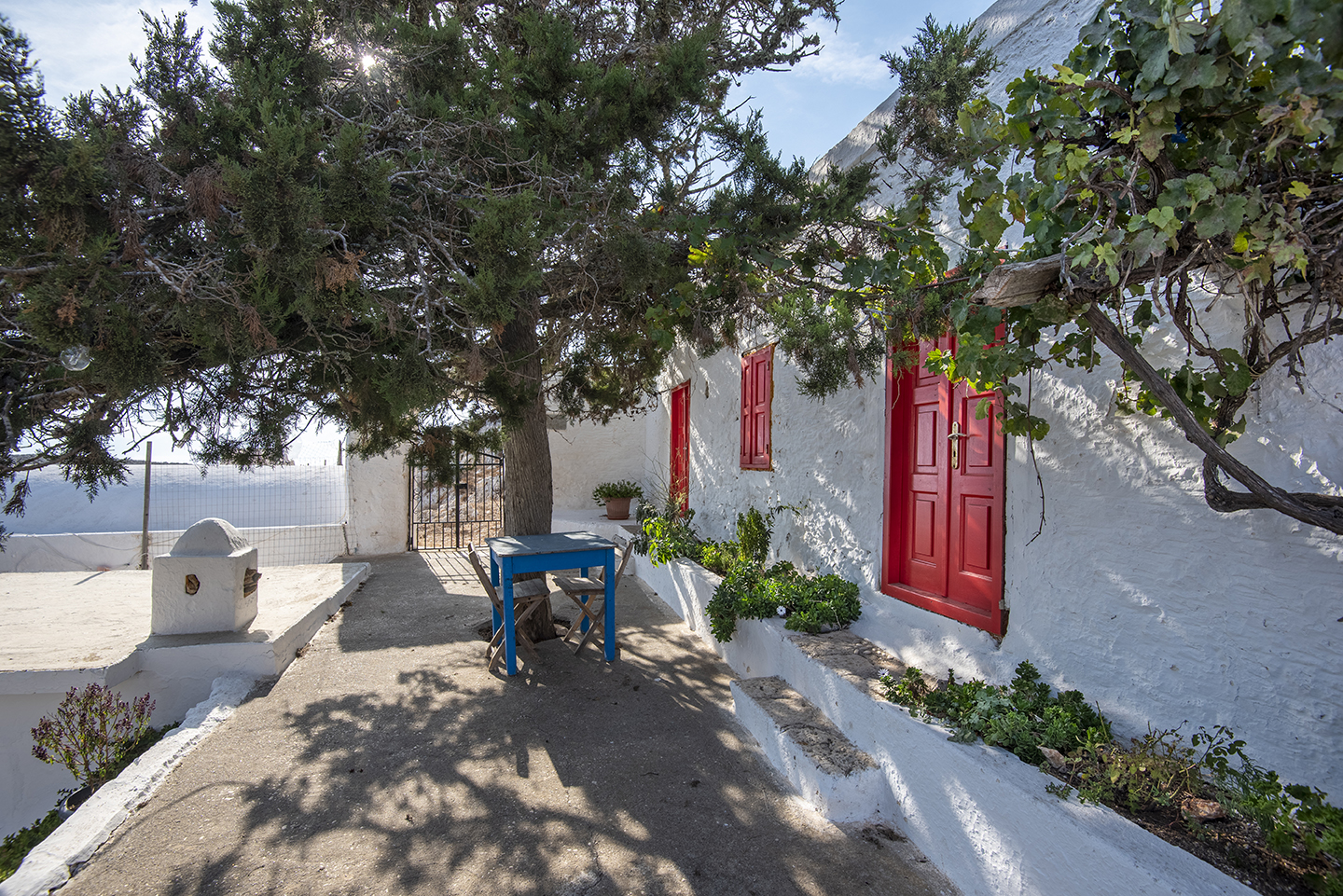
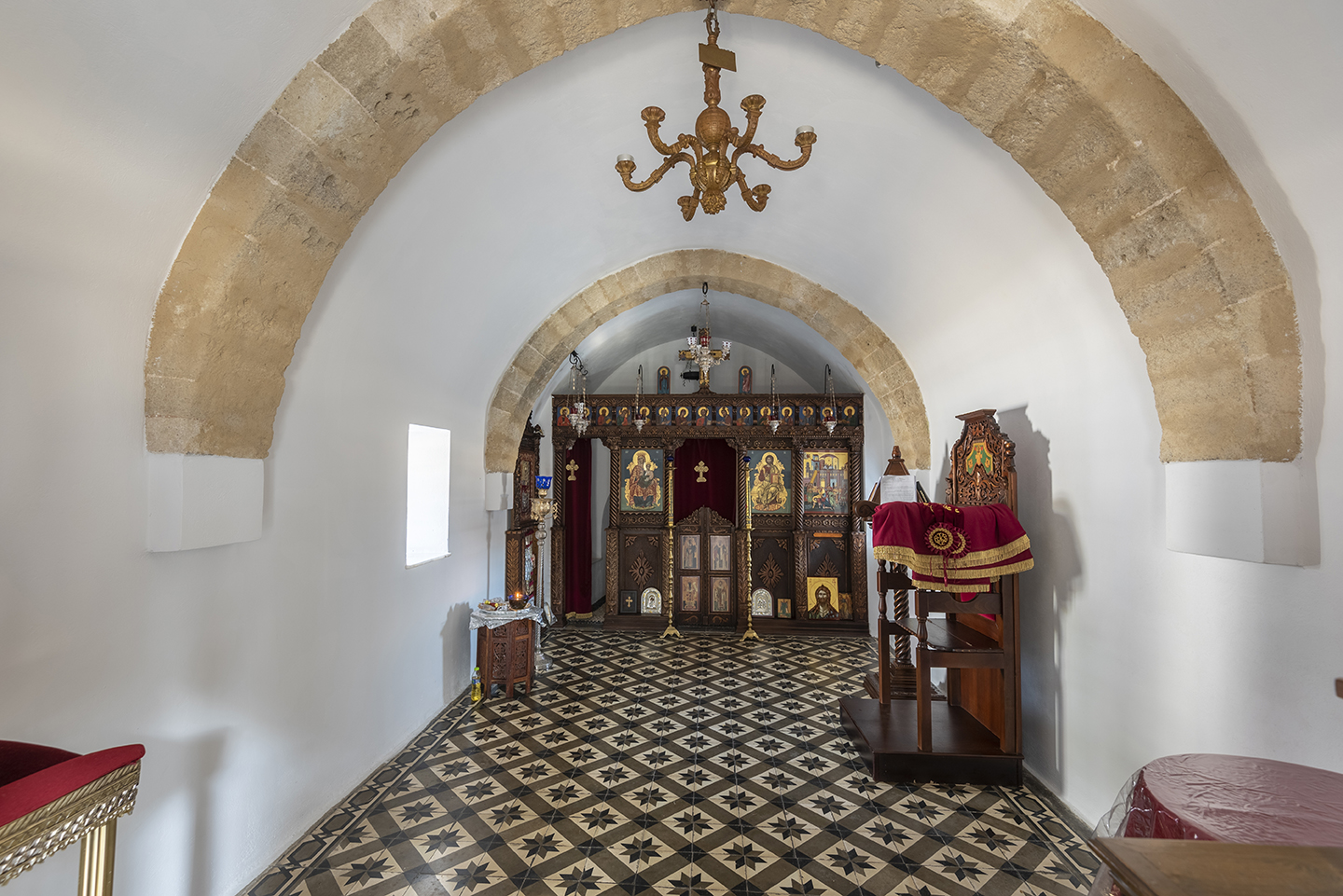
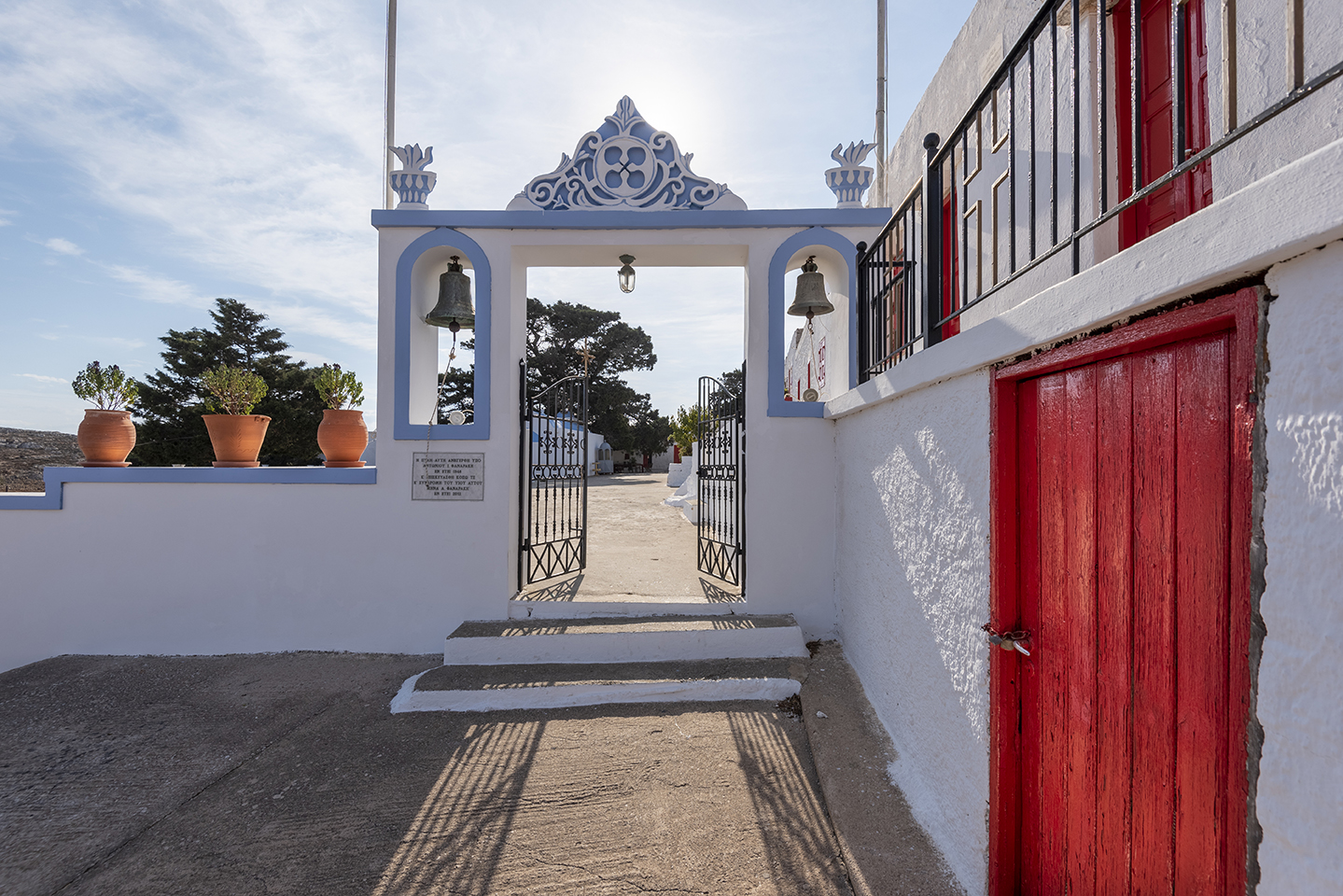
The Monastery of Archangel Michael Panormitis / Palarniotis is located on the hill of Agios Onoufrios, near Chorio. The geometric patterns of the pebble mosaic in the monastery’s courtyard are an authentic example of Dodecanese art. From there, you can admire the panoramic view and the small islets around the island of Chalki.
Archaeological Sites
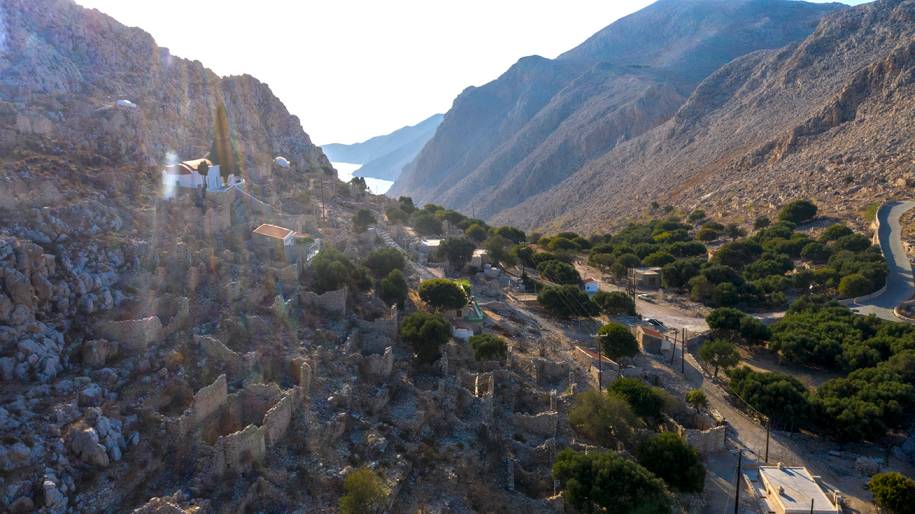
The Abandoned Village (Chorio)
The last inhabitants of Chorio left the area in 1970. The first building you can see from the old path is the church of Agioi Anargyroi, surrounded by olive trees. Next is the Church of the Savior and the old school, which is in better condition. The small monasteries of Agia Triada, Agios Konstantinos, and the vaulted church of Panagia Choriani, with its massive cypress tree, are preserved throughout Chorio. These shrines remain undeniable witnesses of the flourishing the settlement once knew. It is worth noting the isodomic walls found in various ruined houses, the scattered architectural parts in the cemetery, the sarcophagi, and the Doric capital at Agios Konstantinos. Two thrones carved into the rock with the inscription “DIOS EKATIS” were found a little further above the village, which you definitely should visit.